
School & Education LED Lighting
School & Education LED Lighting
Schools, colleges, and universities can cut energy and maintenance costs by switching to LED lighting. Studies show LEDs improve student focus and performance, unlike flickering fluorescent lights, which can cause headaches and fail often, leaving rooms dim. Switching to LEDs can save over 80% on energy bills and maintenance costs. LEDs also boost campus safety with bright, consistent lighting both inside and outside, improving visibility for students, staff, and visitors. Plus, LED floodlighting can enhance the look of campus buildings, making them more attractive to prospective students and visitors.
Grants & funding support for schools
Upgrading to LED is often eligible for UK public-sector funding, and we’ll help you secure it. Root3 prepares everything needed for grants and site survey, lux plans, energy/cost savings, carbon reduction, payback and ROI. We align proposals to typical criteria used by local authorities and public-sector decarbonisation funds (including Salix-managed programmes), and can support academies, maintained schools and colleges with multi-site bids. If you’re short on time, we’ll handle forms, evidence packs and supplier quotes, then phase works around term dates. Post-install, we provide commissioning records and measured savings so you can demonstrate outcomes and unlock any staged funding.
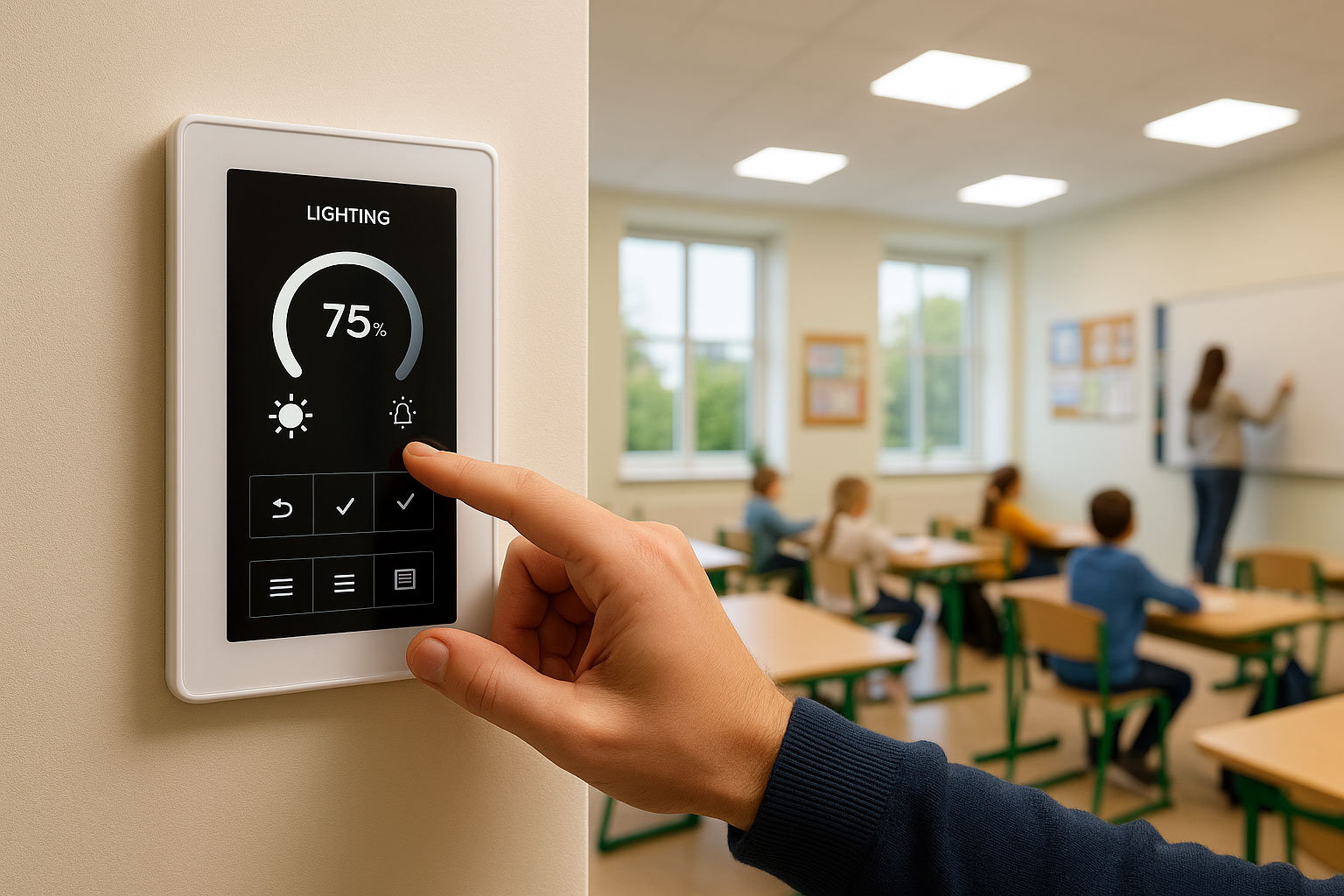
Smart Controls for Education
Classroom Standards: Lux, Glare & Colour
We design to BS EN 12464-1 so classrooms are bright, comfortable and screen-friendly: 300–500 lux for general teaching, UGR < 19 to control glare, and CRI 90 / 4000K where colour matters (art, labs). Corridors and stairwells get safe, even levels, while sports halls target higher lux and uniformity to reduce shadows. You’ll receive a full lux plan and compliance sign-off for governors and audits.
Emergency Lighting & Testing (BS 5266)
Every school needs reliable escape lighting. We specify BS 5266 compliant emergency systems, maintained/non-maintained fittings, correct spacings, and signage to BS 5499 with self-test or DALI-2 automated testing. Monthly function and annual 3-hour tests are logged automatically, with clear reports for inspections. Upgrades can be phased during holidays or out-of-hours to avoid disruption.
Benefits
- Improved Focus and Performance: LED lighting enhances concentration by providing bright, consistent light, which can help students focus better and perform well.
- Reduced Eye Strain: Unlike flickering fluorescent lights, LEDs provide steady light that reduces eye strain and headaches, making for a more comfortable learning environment.
- Energy Savings: LED lights use up to 85% less energy than traditional lighting, lowering electricity costs for schools and universities.
- Lower Maintenance Costs: LEDs last much longer than fluorescent lights, reducing the need for frequent replacements and maintenance (up to 95% savings on maintenance costs).
- Better Campus Safety: Bright, even LED lighting improves visibility around the campus, making it safer for students, staff, and visitors both indoors and outdoors.
- Enhanced Learning Environments: Proper lighting improves the overall ambiance of classrooms, lecture halls, and study areas, creating a more conducive environment for learning.
- Eco-Friendly: LEDs are more sustainable, using less energy and containing no harmful chemicals like mercury, which is better for both the environment and health.
- Attractive Campus Aesthetic: LED floodlighting can be used to highlight building features, making campus grounds look more impressive and appealing to prospective students and visitors.
- Flicker-Free Light: LEDs provide a stable light source that reduces distractions from flickering, which can negatively affect students’ concentration.
- Long Lifespan: LEDs have a much longer lifespan than traditional lighting, meaning less disruption in classrooms and lower long-term costs.
Why choose LED Education Lighting
Promoting focus & Safety
Improved Focus and Performance
LED lighting enhances concentration by providing bright, consistent light, which can help students focus better and perform well.
Better Campus Safety
Bright, even LED lighting improves visibility around the campus, making it safer for students, staff, and visitors both indoors and outdoors.
Eco-Friendly
LEDs are more sustainable, using less energy and containing no harmful chemicals like mercury, which is better for both the environment and health.
LED Lighting for Schools; What to Choose & Why
Quick guide to the right luminaires for classrooms, corridors, sports and exteriors—aligned to comfort, compliance and savings.